
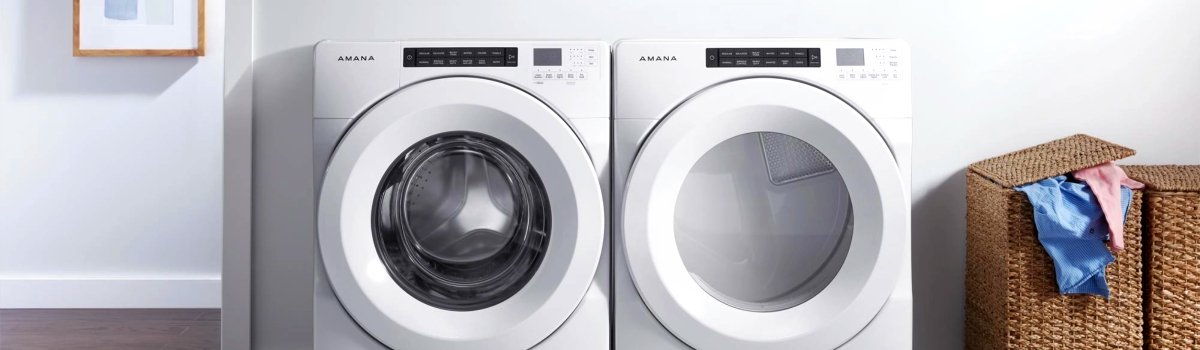
When your Amana washer suddenly stops and flashes Error Code “Sud” or “Sd”, it usually means the washer thinks there are too many suds in the drum. The machine pauses the cycle to protect the motor, pump, and sensors, and that can be frustrating when you just want clean laundry.
The good news? In most cases, this error is tied to detergent, loading, or drainage issues you can handle at home with a little time and patience. This guide walks you through what the Sud/Sd error really means, what usually causes it, how to fix it step by step, and how to prevent it from coming back.
What the Amana Sud / Sd Error Really Means
On Amana washers, Sud or Sd usually points to a suds or draining problem. The control board senses that:
- There is too much foam in the drum, or
- The washer is having a hard time draining water, and the system thinks that excess suds may be involved.
Your washer expects water to move in and out at a certain speed. Thick, foamy water can slow that down and confuse the pressure sensors. When that happens, the machine pauses to run a “suds reduction” routine, and shows Sud or Sd on the display.
Sometimes you’ll see a lot of visible foam. Other times, you won’t see much at all, but there’s still too much detergent in the water or a partial blockage making the washer behave like it’s over-sudsing.
Common Reasons You See Sud or Sd on an Amana Washer
Many people assume the washer is “broken” as soon as a code appears, but Sud/Sd is often tied to everyday habits.
Here are some of the most common causes:
- Using regular detergent instead of HE (high-efficiency) detergent
- Using too much HE detergent, even if it’s the right type
- Adding extra soap “just in case” clothes are very dirty
- A clogged or dirty drain pump filter (on models that have one)
- A partially blocked drain hose or standpipe
- Build-up of old detergent, fabric softener, and lint in the drum or dispenser
- Washing very small loads, very heavy bulky items, or oversized loads that affect spin and draining
A lot of the time, fixing one or two of these issues is enough to clear the code and get your washer running smoothly again.
First Aid for the Sud / Sd Error: What To Do Right Away
Before diving into deeper fixes, it’s smart to try a few simple steps to let the washer reset and clear out leftover suds.
- Pause the cycle
If the washer is still running, press Pause/Cancel and give it a moment. - Let the suds settle
Leave the washer for 10–15 minutes with the door closed. This gives the suds a chance to break down. - Run a Rinse & Spin cycle
Choose Rinse & Spin with no detergent added. This helps flush out extra soap and foam from the drum and drain system. - Check the drum visually
When the cycle ends, open the door and look inside:- If you still see a lot of foam, run another Rinse & Spin.
- If the drum looks clear, try a small load with very little detergent and see if the error returns.
If the Sud or Sd error keeps coming back, it’s time for a deeper look at detergent, the drain system, and basic maintenance.
Check Your Detergent: HE Only, and Less Than You Think
One of the biggest triggers for the Sud / Sd code is detergent misuse. HE washers like Amana models use less water, so they’re very sensitive to suds.
Even if you’ve had your washer for years, it’s worth checking a few things:
- Make sure your detergent bottle clearly says “HE” or “High-Efficiency.”
- Skip regular or “2-in-1” detergents that don’t show HE on the label.
- Use less than the maximum line on the detergent cap. Most people use way more than they need.
A simple rule of thumb:
For a normal load, many HE detergents only need about 1–2 tablespoons. That’s often much less than the cap suggests.
If you recently switched brands, started using pods, or added extra soap for “tough stains,” that alone may explain the Sud/Sd error.
DIY Fixes for Amana Sud / Sd: Step-by-Step
Once you’ve checked the basic things, you can move into more hands-on DIY steps. These steps are still homeowner-friendly and don’t require special tools in most cases.
1. Clean the Washer Drum and Run a “Tub Clean” Style Cycle
Over time, detergent, fabric softener, and lint can build up inside the drum and outer tub. That buildup turns every wash into a foam party and makes Sud/Sd more likely.
You can clean things up by:
- Removing any clothes from the washer
- Adding no laundry detergent
- Using a washer cleaner tablet or a cup of white vinegar in the detergent dispenser (if your manual allows it)
- Running a Clean Washer, Tub Clean, or Hot Heavy cycle with no load
If your washer doesn’t have a special cleaning cycle, a hot cycle with an extra rinse works well. Do this once, and repeat if you haven’t cleaned the washer in a long time.
2. Inspect and Clean the Drain Hose
A partially clogged or kinked drain hose can make the washer drain slowly. The control board may read that slow draining as a suds problem and trigger the Sud/Sd code.
Here’s what to look for:
- Make sure the hose is not kinked or crushed behind the washer.
- Check that the hose is not pushed too far into the standpipe (the wall drain). That can cause airflow issues and slow draining.
- If you can, disconnect the hose and check for lint, coins, or buildup inside.
- Look at the household drain where the hose hangs—if it’s clogged, water can back up and confuse the washer’s sensors.
Clearing the hose and the standpipe not only helps with Sud/Sd, but also reduces the risk of other drain-related errors.
3. Clean the Drain Pump Filter (If Your Model Has One)
Some Amana washers include a drain pump filter accessible behind a small panel on the front bottom of the machine. Others may not have a user-serviceable filter. If your model does, a clogged filter can absolutely create Sud/Sd-style problems.
A typical cleaning process looks like this:
- Turn off and unplug the washer.
- Place a shallow pan or towel under the filter area.
- Open the access panel and unscrew the filter slowly—water will drain out.
- Remove lint, coins, buttons, and debris from the filter.
- Check the opening inside with a flashlight for any leftover gunk.
- Reinstall the filter snugly and close the panel.
Always follow your specific model’s instructions in the owner’s manual. A clear filter helps water move freely and makes false suds errors much less likely.
4. Use Proper Load Sizes and Balance the Drum
Even if your detergent is perfect, how you load the washer can still trigger a Sud or Sd code.
Here are a few helpful habits:
- Avoid overstuffing the drum. Bulky loads trap soap and water and are hard to spin out.
- Don’t wash a single heavy item alone (like one big bath mat or comforter). Add a couple of lighter items to help balance the drum.
- Spread clothes around the drum instead of piling them in one tight ball.
- For very dirty items, pick a cycle with extra rinses instead of dumping in more detergent.
A well-balanced load spins and drains better, which makes it easier for the washer to clear soap from the system and avoid error codes.
5. Reset the Washer After Fixes
After you’ve cleaned the drum, checked the hose, and adjusted your detergent habits, it’s a good idea to reset the washer so it can “forget” any temporary sensor confusion.
A simple reset sequence looks like this:
- Turn the washer off.
- Unplug it for a couple of minutes.
- Plug it back in, turn it on, and run a small test load with a tiny amount of HE detergent.
If the Sud or Sd error does not show up again, your fixes likely worked. If it returns frequently even after all these steps, the issue may be deeper in the system (pressure sensor, control board, or drain pump) and may need professional diagnosis.
When the Sud / Sd Error Might Mean a Deeper Problem
Most of the time, the Sud or Sd code is rooted in detergent and maintenance. But in some cases, it’s a symptom of another issue.
Possible deeper causes include:
- A weak or failing drain pump that struggles to move water fast enough
- A pressure sensor or pressure hose that’s partially blocked or malfunctioning
- Internal wiring or control board problems affecting how the washer interprets water levels and drain times
If you’ve:
- Switched to proper HE detergent and reduced the amount
- Cleaned the drum and run cleaning cycles
- Checked hoses and filters
- Tried smaller, well-balanced loads
…and the error still appears often, it’s a sign your washer may need professional attention.
Preventing the Sud / Sd Error in Everyday Use
Once you’ve fought through the Sud or Sd error, the goal is simple: don’t let it come back. A few small habits can make a big difference.
Here are practical, easy-to-follow prevention tips:
- Stick to HE detergent only, and always under-dose rather than over-dose.
- Avoid pouring extra soap “just in case.” Use stain remover sprays or pre-soak options instead of more detergent.
- Run a washer cleaning cycle once a month or so, especially if you wash with cold water often.
- Wipe down the rubber door seal and detergent dispenser regularly to remove residue.
- Keep the drain hose free of kinks and check that it’s positioned correctly in the standpipe.
- Avoid constant tiny or single-item loads; aim for medium, balanced loads whenever you can.
These small steps help your Amana washer drain properly, reduce foam, and keep the sensors happy—so you spend more time doing laundry and less time staring at error codes.
Summary: Turning Sud / Sd From a Headache into a Warning Sign
The Amana washer Sud or Sd error code is basically your washer saying, “There’s too much soap or I can’t drain like I should.” It’s annoying, but it’s also a helpful warning that something in your routine or your plumbing needs attention.
By:
- Using correct HE detergent in smaller amounts
- Cleaning the drum, drain hose, and filter (if your model has one)
- Adjusting load size and balance
- Running regular maintenance cycles
…you can usually clear the code and keep your washer running smoothly for years.
Think of Sud/Sd not as the end of your washer, but as a friendly nudge to fine-tune how you use it. Once you make those changes, the code often disappears—and stays gone.