
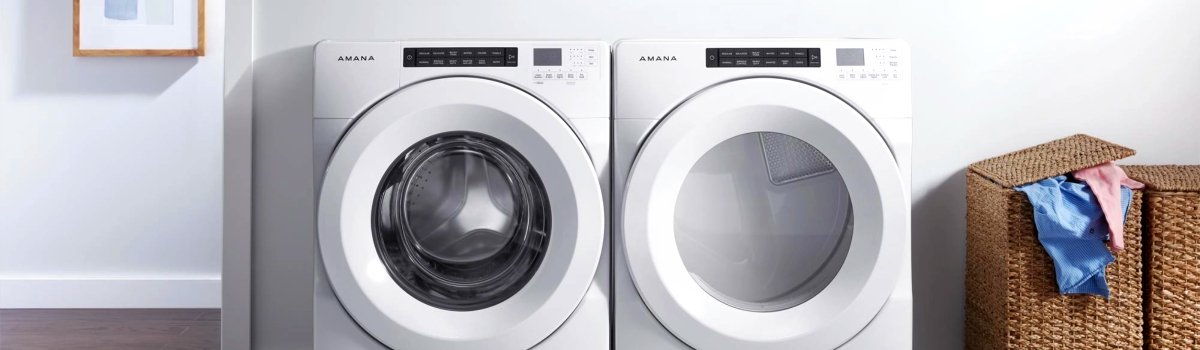
When your Amana washer suddenly stops and flashes F8 E1 or LO FL, it’s more than just an annoying message on the display. These codes mean your washer thinks it’s not getting enough water to do the job correctly. If you ignore it, cycles may take longer, clothes might come out still soapy, or the washer may refuse to start at all.
The good news? In many cases, this error is caused by something simple with your water supply or hoses that you can fix yourself at home. This guide walks you through what the error means, the most common causes, step-by-step DIY solutions, and practical ways to prevent the problem from coming back.
What Does the F8 E1 / LO FL Error Mean?
On an Amana washer, F8 E1 or LO FL stands for “low water flow.” The control board is telling you that it opened the water valves, waited for the tub to fill, and didn’t see enough water come in within the expected time.
In everyday language, your washer is basically saying:
“I’m trying to fill, but I’m not getting enough water.”
You might notice things like:
- The washer starts a cycle but stalls during the fill stage
- You hear clicking or a brief water sound, then it shuts down with the error
- The tub has very little or no water when the error appears
The problem is almost always linked to the water supply, hoses, or inlet screens, not the drum or motor.
Main Causes of F8 E1 / LO FL on an Amana Washer
Even though the error looks technical, the reasons behind it are usually very straightforward. Think of the washer as a faucet with a brain: if water can’t get in fast enough, the brain complains.
Here are the most common causes, explained in simple terms:
1. Water Faucets Not Fully Open
If the hot or cold water valves at the wall are not turned all the way on, the washer may struggle to fill. Even a half-closed valve can slow the flow enough to trigger F8 E1 or LO FL, especially on newer, more sensitive models.
2. Kinked or Crushed Hoses
Behind the washer, the inlet hoses sometimes get bent sharply or pinned against the wall. That kink is like stepping on a garden hose – the water slows down to a trickle. If the washer senses that slow fill, it throws the error.
3. Clogged Inlet Screens
Inside where the hoses connect to the back of the washer, there are small mesh screens that catch debris from the plumbing system: tiny pieces of rust, sand, or mineral buildup. Over time, those screens can clog and block water flow.
4. Low House Water Pressure
If your home has low water pressure (old plumbing, well issues, shared building supply, etc.), the washer may not get enough water in the time it expects. Sometimes this happens only at certain times of day when everyone is using water.
5. Faulty or Sticking Inlet Valve
Inside the washer, an inlet valve opens to let water into the tub. If it’s partially stuck, clogged internally, or starting to fail, the washer might get a weak flow of water even if the hoses and faucets are fine.
6. Load or Cycle Issues
Occasionally, using a special cycle with very low water levels, or starting a cycle after a power glitch, can confuse the control and lead to a low-flow error. This is less common but still possible, especially if the error appears only once and then disappears.
DIY Fixes: Step-by-Step Guide to Clearing F8 E1 / LO FL
Before you start, unplug the washer or switch off the breaker for safety whenever you’re moving it or disconnecting hoses. When you’re just checking settings and buttons, you can leave it powered, but use common sense and be careful around water.
Here’s a simple plan you can follow:
1. Make Sure the Water Faucets Are Fully Open
Start with the easiest check:
- Gently pull the washer out from the wall just enough to reach the faucets.
- Look at the hot and cold water valves (usually red and blue, or both plain).
- Turn both valves all the way counterclockwise until they stop.
- If one valve was partially closed, that alone may have caused the low flow.
Once they’re fully open, try running a quick cycle after you reset the washer (we’ll cover the reset steps further below). If the error doesn’t come back, you’ve likely solved it.
2. Inspect the Hoses for Kinks and Damage
Next, focus on the hoses:
- Check if either hose is bent sharply, twisted, or crushed between the washer and the wall.
- Look for bulges, cracks, or soft spots that suggest internal damage.
- Straighten any kinks and, if needed, reposition the washer so the hoses have a smooth path.
If a hose looks damaged or very old, it’s a good idea to replace it. A bad hose can cause low flow now and a leak later.
3. Clean the Inlet Screens at the Back of the Washer
This step is incredibly common and very effective. You’ll need a small brush (old toothbrush works great) and a towel.
- Turn off both water valves.
- Unplug the washer if you haven’t already.
- Place a towel under the hoses to catch any drips.
- Unscrew the hot and cold hoses from the back of the washer.
- Look inside the metal ports on the washer – you should see small mesh screens.
- If they’re covered in debris or mineral buildup, gently clean them with the brush.
- Do not poke the screens with sharp tools; you don’t want to damage them or push debris into the valve.
- Reattach the hoses securely and turn the water valves back on.
This alone often restores proper water flow and stops the F8 E1 / LO FL errors.
4. Check House Water Pressure and Faucets
If you notice weak water flow at other fixtures (sinks, showers), your home’s water pressure might be part of the problem.
You can:
- Turn on a nearby sink and see if the pressure looks normal.
- Avoid running the washer while multiple heavy-use fixtures (like sprinklers or multiple showers) are on.
- If water pressure is consistently poor, you may need to talk to a plumber or building maintenance.
A washer can only work with the water you give it, so low household pressure can directly lead to low-flow errors.
5. Look for Inlet Valve Issues
If the hoses are clear, the faucets are open, and you’ve cleaned the inlet screens, but the washer still fills slowly or with an uneven spray, the internal water inlet valve may be starting to fail.
Signs of a possible valve issue include:
- One temperature (hot or cold) barely flows, even though its faucet has strong pressure
- The washer makes a humming sound when it tries to fill, but you see almost no water entering
- The error returns quickly, even after basic checks
Replacing the inlet valve usually requires basic tools and some repair experience. If you’re not comfortable opening up a washer, this is a good point to consider a professional repair.
How to Reset Your Amana Washer After Fixing the Cause
Once you’ve checked and corrected the water supply issues, you’ll want to clear the error code so the washer can start fresh.
You can reset most Amana washers that show F8 E1 or LO FL like this:
- Press the Pause/Cancel button twice.
This stops the current cycle and cancels the error state. - Press the Power button once.
This turns the washer off and resets the control.
After that, turn the washer back on and run a short test cycle (like a rinse & spin or quick wash). Stay nearby during the fill stage to make sure the water flows normally and the error doesn’t return.
Extra Checks If the Error Keeps Coming Back
If the F8 E1 or LO FL code returns after you’ve done the basic steps, it’s worth looking a little deeper. This doesn’t mean your washer is done for, but it may need more attention than a quick hose check.
Here are a few additional things to keep in mind:
- If you live in an area with very hard water, mineral buildup can return quickly, especially on inlet screens and inside valves.
- If the washer is installed in a tight closet or small laundry space, hoses may get re-kinked when the machine vibrates during spin.
- If the error only appears on certain cycles (like heavily soiled or bulky items), the control might be expecting a faster fill rate for those specific settings.
In those cases, cleaning the screens regularly and making sure the hoses have room to move can make a big difference.
Preventive Tips to Avoid F8 E1 / LO FL in the Future
Once you’ve fixed the low-flow error, it’s smart to make a few small changes to reduce the chances of seeing it again. A little prevention goes a long way with modern washers.
You can help prevent future F8 E1 or LO FL errors by:
- Keeping both water valves fully open whenever the washer is in use
- Checking hoses a few times a year for kinks, tight bends, or damage
- Cleaning inlet screens periodically, especially if your home has hard water or older plumbing
- Avoiding running multiple heavy-demand water appliances at the same time (washer, sprinklers, multiple showers) if your water pressure is borderline
- Replacing old hoses every few years with quality, braided hoses to reduce both flow problems and leak risks
- Making sure the washer is installed with enough clearance behind it so hoses aren’t pressed hard against the wall
These small habits help keep water flowing freely and let the washer fill the way it was designed to.
Final Thoughts
The F8 E1 / LO FL error on an Amana washer looks intimidating, but most of the time it’s simply your machine telling you, “I’m not getting enough water.” By checking the water supply, hoses, and inlet screens, and then resetting the washer, many homeowners can clear the error without major repairs.
Take your time, follow the steps carefully, and keep up with simple preventive maintenance. With a good water supply and a little attention, your Amana washer can run smoothly again and stay free of low-flow errors for a long time.