
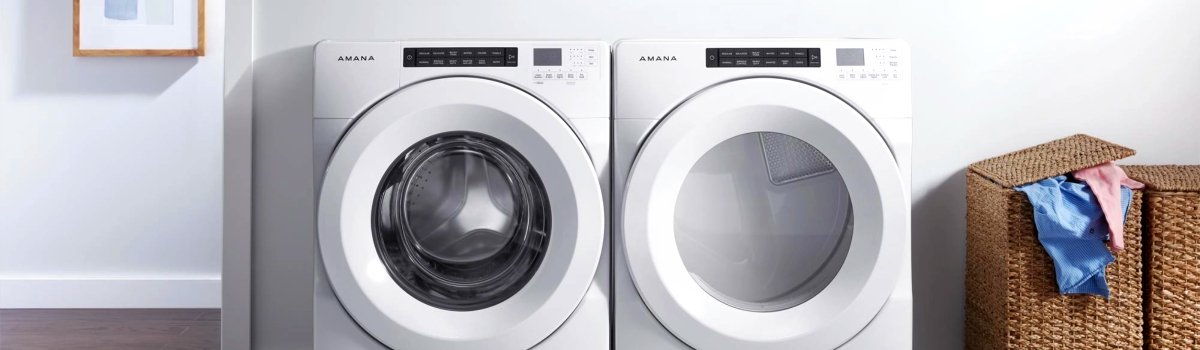
When your Amana washer suddenly stops and flashes Error Code F7 E1, it can feel pretty stressful. The good news? This code usually points to a very specific problem — a motor speed sensing error — and in many cases, you can troubleshoot it yourself at home without any special tools.
In this guide, we’ll walk through:
- What the F7 E1 error actually means
- Common causes (and what they look like in real life)
- Step-by-step DIY solutions you can try
- Preventive tips to keep the error from coming back
All in simple, everyday language so you don’t need to be a technician to follow along.
What Is Amana Washer Error Code F7 E1?
The F7 E1 error code basically means the washer’s control board expected the motor to spin the drum at a certain speed, but it didn’t happen. The machine detects that the motor speed is wrong or not changing the way it should, so it stops the cycle for safety and shows you this error.
In practice, that might look like this:
- The washer fills with water, but the drum barely moves
- The drum tries to spin, then stops and the code pops up
- The washer seems “stuck” in one part of the cycle
So, the washer is telling you, “Hey, I can’t get the drum up to speed — something is stopping me.”
Main Causes of F7 E1 on an Amana Washer
There are several common reasons why the motor can’t reach proper speed. Some are very simple, others might need a technician, but it makes sense to start with the easy checks.
Most common causes:
- Overloaded drum (too many clothes in one load)
- Clothes bunched up and unbalanced
- Shipping bolts left in place on a new washer
- Temporary control glitch
- Mechanical or electrical issues (belt, motor, or wiring – usually professional territory)
Let’s break these down in more detail so you can recognize what’s happening with your machine.
Cause #1: Overloading and Unbalanced Loads
One of the most common triggers for F7 E1 is just too much laundry in the drum, or laundry that’s bunched up in one spot.
When this happens, the motor has to work harder than normal. If it can’t get the drum up to the right speed, the control board reads that as a motor speed problem and throws the error.
Signs this might be your issue:
- The drum looks “packed full” of clothes
- Heavy items (like towels or blankets) dominate the load
- The washer starts to spin, then stops and shows the error
Try to imagine the drum trying to spin a big tangled ball of wet laundry — it’s not easy.
What You Can Do (DIY)
- Open the washer and check the size of the load.
- If the drum is more than about ¾ full, it’s probably overloaded.
- Remove a few heavy items (towels, jeans, blankets) and set them aside.
- Redistribute the clothes evenly around the drum instead of one big lump.
Then you can try restarting the washer (we’ll cover the reset steps in a bit).
Cause #2: Shipping Bolts Left in a New Washer
If your Amana washer is newly installed, the F7 E1 error can come from a very simple cause: shipping bolts that were never removed.
These bolts are used during transportation to lock the drum in place so it doesn’t bounce around in the truck. Once the washer is installed, they must be removed. If they’re left in, the drum can’t move freely, and the motor can’t reach proper speed.
How this usually happens:
- New washer was installed quickly
- Owner didn’t know shipping bolts existed
- Drum feels stiff or doesn’t move smoothly when you spin it by hand
How to Check for Shipping Bolts
- Look at the back of the washer.
- You’ll see bolts or metal rods that look different from normal screws holding the back panel.
- On most models, these shipping bolts are large and often come with plastic spacers.
If you still have the user manual, it usually shows exactly where these bolts are and how many there should be.
DIY Fix for Shipping Bolts
- Turn the washer off and unplug it from the outlet.
- Carefully unscrew and remove each shipping bolt as instructed in the manual.
- Keep the bolts in a safe place in case you ever move the washer again.
- Gently try turning the drum by hand — it should move much more freely.
Once the shipping bolts are out, you can try running a small test load to see if the error is gone.
Cause #3: Temporary Control Glitch
Sometimes the F7 E1 code is not caused by a serious mechanical failure at all. Like many modern appliances, Amana washers have electronic control boards, and they can occasionally glitch.
You might see the error after a power surge, an interruption, or if the washer was stopped and started repeatedly.
In these situations, the washer just needs a reset.
How to Reset / Restart the Washer
After you’ve checked the load and removed any shipping bolts on a new washer, try restarting the cycle:
- Press the cancel (or pause/cancel) button twice.
- Press the power button once to turn the washer off.
- Wait a minute.
- Turn the washer back on, then select a small, regular cycle with fewer clothes than usual.
If the F7 E1 code doesn’t return on a light load, there’s a good chance the problem was overload or a temporary glitch.
Other Possible Causes (When DIY Isn’t Enough)
If you’ve:
- Reduced the load
- Checked for and removed any shipping bolts (new washer)
- Reset the washer and tried a light cycle
…and the F7 E1 error still comes back, then the issue might be more serious.
Possible deeper issues:
- Worn or loose drive belt
- Faulty speed sensor (tachometer) on the motor
- Motor itself failing or overheating
- Wiring problems between the motor and control board
- Control board problems
These are usually not DIY-friendly, because they often require:
- Accessing internal parts
- Electrical testing with a meter
- Replacing components safely
In this situation, it’s safer to stop using the washer and contact a professional appliance technician.
Step-by-Step DIY Action Plan for F7 E1
Let’s put everything together into a simple flow you can follow.
- Stop the cycle safely
- Press cancel/pause, let the washer unlock the door.
- Don’t force the door open.
- Check the load
- Remove heavy items if the drum is crammed.
- Make sure clothes aren’t wrapped in one tight bundle.
- Aim for a moderate, evenly distributed load.
- Check for shipping bolts (new washers)
- Look at the back of the machine.
- Remove any large bolts clearly marked as shipping hardware.
- Confirm the drum moves more freely by hand.
- Restart the washer
- Press cancel twice and power once (if your model uses that sequence).
- Wait a minute, then select a small load or a quick wash.
- Run the cycle and watch the initial spin/agitator action.
- Observe the behavior
- If it runs normally once the load is corrected, the problem was likely overload or imbalance.
- If the code pops up again on a small, balanced load, a deeper mechanical or electrical issue is likely.
Preventing Amana F7 E1 Error in the Future
Once you’ve cleared the F7 E1 code, the next step is to avoid seeing it again. A few simple habits can make a big difference.
Focus on how you load, how often you maintain, and how you use the washer.
Smart Loading Habits
- Don’t overstuff the drum. Try to keep it under about ¾ full. Clothes need room to move.
- Mix heavy and light items. Don’t run a load of only towels or only jeans when possible. Mix in lighter items to help balance weight.
- Untangle long items. Before starting, shake out sheet sets, blankets, and long sleeves so they don’t become one big knot.
These simple steps reduce strain on the motor and help it reach proper speed without trouble.
Maintenance and Care
Text block (no list here, just straight talk):
Your washer doesn’t need a lot of maintenance, but a little care can extend its life and reduce error codes like F7 E1. Keep the area around and under the washer clean so the machine stays level and stable. If the washer starts to vibrate a lot or “walk” during spin cycles, it might be out of level — and that extra movement can stress both the drum and the motor.
From time to time, check the water hoses and the back of the machine to make sure nothing is rubbing, pinched, or pulling at the connections. A washer that’s pushed too tight against the wall can strain wiring or hoses over time.
Usage Tips That Protect the Motor
- Use the right cycle for the load: heavy duty for towels and jeans, delicate for lighter fabrics.
- Avoid running back-to-back heavy loads all the time; give the motor short breaks between large loads.
- If you hear unusual grinding, squealing, or burning smells, stop the cycle and investigate before continuing.
These habits reduce wear on the motor, belt, and internal parts that affect drum speed.
Final Thoughts
The Amana Washer Error Code F7 E1 can look intimidating, but it doesn’t always mean your washer is “dead.” In many cases, the fix is as simple as:
- Reducing an overloaded drum
- Rebalancing the laundry
- Removing shipping bolts on a new installation
- Resetting the machine after you’ve corrected the cause
By understanding what this code really means — a motor speed sensing problem — and taking a careful, step-by-step approach, you can often get your washer back to normal operation without panic.
And even if you do end up needing professional help, you’ll already know exactly what’s going on with your machine, which makes the whole process faster and less stressful.