
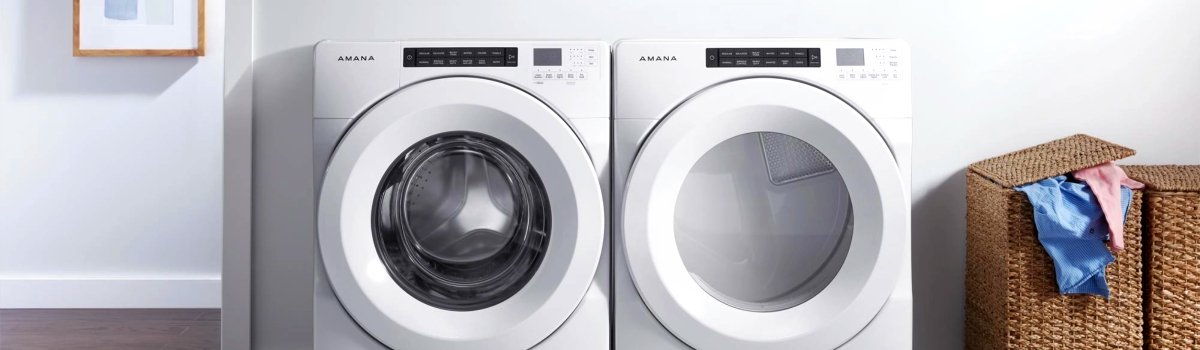
When your Amana washer suddenly stops mid-cycle and flashes Error Code F9 E1, it’s frustrating and confusing. The good news is that this code usually points to one specific issue: the washer is taking too long to drain – typically more than about eight minutes.
In most cases, this doesn’t mean your washer is “dead.” It usually means something in the drain system is restricted, blocked, or not working the way it should. With some basic checks and a bit of time, many homeowners can handle this on their own.
This guide explains, in simple language:
- What the Amana washer error code F9 E1 actually means
- The most common reasons your washer is draining slowly
- Step-by-step DIY solutions you can safely try at home
- Everyday habits and maintenance tips to prevent F9 E1 from coming back
What Amana Washer Error Code F9 E1 Really Means
The control board in your Amana washer expects the water to drain out within a certain amount of time. When the drain time is longer than expected (around eight minutes or more), the washer “times out” and throws F9 E1.
In simple terms, your washer is saying:
“I’m trying to drain, but water is leaving way too slowly or not at all.”
This can show up as:
- The washer stopping mid-cycle with water still in the drum
- Clothes still soaking wet at the end of the cycle
- A long pause before spinning or the spin not starting at all
- Gurgling or humming sounds during the drain phase
The good thing is that the error is symptom-based. It doesn’t point to a single part only. Instead, it points you toward everything related to draining water: the drain hose, standpipe, pump, filter, and sometimes the wiring or control.
Main Causes of F9 E1 on Amana Washers
Most of the time, F9 E1 comes from something simple in the drain path. Think of it like a traffic jam: somewhere between the washer tub and your home’s drain line, water can’t move freely.
Common reasons include:
- A clogged drain filter or pump filled with lint, coins, hairpins, or small clothing items
- A kinked, crushed, or clogged drain hose at the back of the washer
- The drain hose pushed too far into the standpipe, causing siphoning or airflow issues
- A partially blocked standpipe or home drain that can’t keep up with the drain pump
- A weak or failing drain pump that is running but not moving water fast enough
- Electrical issues, like a loose wire connection at the pump (less common, but possible)
Often, it’s not one dramatic problem but a combination of smaller ones: a bit of lint in the filter, some buildup in the drain hose, and a standpipe that’s already slow. Together, those small restrictions add up to long drain times and trigger F9 E1.
Safety First Before You Start
Before you work on your washer, keep a few simple safety rules in mind:
- Unplug the washer from the electrical outlet before opening panels or touching internal parts.
- If you need to move the washer, slide it gently to avoid damaging hoses.
- Keep towels or a shallow pan handy – water will spill when you disconnect hoses or open the pump area.
- If anything feels beyond your comfort level, it’s completely okay to stop and call a professional.
You don’t need to be a technician to do basic checks, but you do need to be safe and patient.
Step 1: Check the Basics Around the Washer
Start with the easy things you can see without tools. Sometimes you can clear the issue without even opening the washer.
Look for these visible problems:
- Is the drain hose kinked, sharply bent, or pinched behind the washer?
- Is the hose inserted too far into the drain standpipe (more than about 4.5–5 inches)?
- Is the washer trying to drain into a clogged utility sink instead of a clear standpipe?
Gently pull the washer a little away from the wall and make sure:
- The drain hose has a smooth curve, not a sharp bend.
- The hose is secured at the correct height (usually 39–96 inches from the floor, depending on the model) so the washer can drain without siphoning.
- The hose isn’t taped airtight into the standpipe – there needs to be air gap so the drain can “breathe.”
After correcting any obvious hose problems, plug the washer back in and run a Drain & Spin (or a similar) cycle to see if the F9 E1 code clears. If the water still drains slowly, move on to deeper checks.
Step 2: Clear the Drain Filter and Pump Area
A very common reason for Amana washer error code F9 E1 is a clogged drain filter or pump trap. Over time, small items can get past the drum and lodge in the filter:
- Coins and keys
- Hair ties, bobby pins, or buttons
- Lint and fabric fibers
- Socks or small pieces of clothing
Most front-load washers (and some top-loads with a direct pump access) have a clean-out area or pump cover. The exact location can vary by model, but it’s usually behind a small access panel at the front bottom of the machine or under the lower front panel.
Here’s the general idea of what you’ll do:
- Unplug the washer from the outlet.
- Place towels and a shallow pan under the pump clean-out area.
- Open the small access panel or remove the lower front panel if needed.
- Slowly loosen the pump filter cap – water will begin to flow out. Let it drain into your pan.
- Once drained, remove the filter completely and clean out all debris.
- Look inside the pump housing and check the impeller (the little fan/propeller inside) for obstructions.
- Reinstall the filter, making sure it’s fully tightened and seated.
If you find a lot of debris, that alone may have been enough to cause the long drain and trigger F9 E1. After reassembling, plug in the washer and test a Drain & Spin cycle again.
Step 3: Inspect the Drain Hose for Clogs and Buildup
If the filter and pump area are clear but you still get F9 E1, the next likely place for trouble is the drain hose itself. Detergent residue, lint, and debris can build up on the inside of the hose over time, especially if you regularly use cold water or too much detergent.
To check the hose more thoroughly:
- Unplug the washer and turn off the water supply if you need to move the washer.
- Carefully pull the washer forward.
- Detach the drain hose from the back of the washer (usually a clamp or spring clip).
- Detach the other end from the standpipe or sink connection.
- Take the hose outside or over a tub and run water through it.
If the water flows slowly or backs up, the hose is partially blocked. You can often clear it by:
- Flushing it with hot water
- Gently using a flexible brush or plumbing snake designed for hoses
- Replacing the hose if it is badly clogged, kinked, or damaged
Avoid using harsh chemicals inside the hose. Hot water and gentle mechanical cleaning usually work well. When the hose is clear, reconnect both ends securely and be sure it’s not kinked when you push the washer back into place.
Step 4: Make Sure Your Home Drain Can Keep Up
Sometimes the washer is fine, but the plumbing it drains into is not. If your standpipe or sink is partially clogged, the washer’s pump may be pushing water faster than your drain can carry it away. That can make it look like the washer has a problem, when in reality your home drain is the bottleneck.
Signs your home drain might be involved:
- Water backs up and overflows from the standpipe when the washer drains
- You hear loud gurgling or see water rising and falling in the pipe
- The sink or tub connected to the same drain line empties slowly
In that case, it’s a good idea to:
- Use a plunger on the standpipe or sink (if accessible)
- Try a drain snake to break up clogs in the pipe
- Avoid chemical drain openers that can damage pipes or create fumes
- Call a plumber if the standpipe or main drain is repeatedly backing up
Fixing the home drain will help your washer drain faster and reduce the chance of seeing error code F9 E1 again.
Step 5: Check the Drain Pump Function
If the hose, filter, and plumbing are all clear and the washer still drains slowly, the drain pump itself might be weak or failing. Over time, pumps can:
- Lose power due to wear on internal parts
- Get noisy or grind because debris passed through
- Stop spinning the impeller even though the motor hums
At this stage, checking the pump is a bit more advanced. Assuming your washer is unplugged and you’re comfortable removing panels, you can:
- Locate the drain pump at the bottom of the machine
- Check the wiring harness for a loose or damaged connector
- Inspect the pump for cracks, leaks, or burn marks
- Try gently spinning the impeller with your fingers to see if it’s stuck
If the pump is getting power but can’t move water effectively, it will need to be replaced. Some homeowners handle this themselves with the help of a detailed service manual or tutorial, but if you’re not comfortable working inside the machine, this is a natural point to have a professional complete the repair.
Soft Resets and Clearing the F9 E1 Error
Once you’ve addressed the possible causes, you’ll want to clear the error code and test the washer. In many cases, the code will clear by itself after a successful drain cycle, but you can also try a basic reset:
- Unplug the washer for a few minutes
- Plug it back in
- Select a Drain & Spin or Rinse & Spin cycle
- Let the washer attempt to drain and complete the cycle
If the drain time is now normal, the Amana washer error code F9 E1 should not return. If it does, then there is still a restriction or a functional issue that wasn’t fully resolved.
Preventive Tips to Avoid Amana Washer F9 E1 in the Future
Once you’ve spent time dealing with an error like F9 E1, it’s worth building a few habits that help you avoid long drain times going forward. Small changes in day-to-day use can make a big difference in how your washer drains and how often it needs attention.
Here are some practical, easy habits that help prevent F9 E1:
- Empty pockets before washing to keep coins, keys, and small objects out of the drain system
- Use high-efficiency (HE) detergent and follow the recommended amount – too much soap means more residue in hoses
- Run an occasional maintenance or cleaning cycle (with washer cleaner or vinegar, if allowed by your manual) to reduce buildup
- Keep an eye on the drain hose position whenever you move or clean behind the washer
- If your model has a clean-out filter, make it part of your routine maintenance to check and clean it every few months
When It’s Time to Call a Professional
If you’ve:
- Checked and adjusted the drain hose
- Cleaned the pump filter and trap
- Verified the hose and standpipe are clear
- Tried a reset and still see F9 E1
then it’s likely that a deeper issue exists – such as a failing drain pump, a pressure sensor problem, or an internal wiring/control issue. At that point, bringing in a qualified appliance technician is the most efficient way to get your washer reliably draining again.
Still, by following the steps in this guide, you’ve already done the most important part: you’ve ruled out the simple causes, protected your washer from further damage, and made it much easier for any professional to finish the diagnosis quickly.
With the right mix of basic checks, simple cleaning, and smart habits, Amana washer error code F9 E1 doesn’t have to be a recurring problem. A clear drain path, a healthy pump, and regular light maintenance go a long way toward keeping your washer draining normally and your laundry routine running smoothly.